
When to change the ventilation filter
When should I change the filter in my ventilation system? This question is asked by every owner of a building, hotel, or office. Any ventilation filter in Batumi has a service life, which depends on various factors. For proper operation of the equipment, it is necessary to monitor the condition of the installed filters. If a filter becomes clogged or fails, dust, germs, and unpleasant odors can enter the room. Many factors besides the type of filter itself influence this, including the location of the air intake, the time of year, and wind direction. Furthermore, it’s important to consider the climate, as Batumi is a seaport city.
Why should you change your filter?
- If you don’t replace an exhausted filter promptly, unpleasant odors will permeate the room.
- This can cause discomfort for staff, reduce productivity, and lead to illness.
- It should be noted that dust settling on heating devices reduces heat output and can lead to increased heating costs.
- Failure to replace filters promptly can lead to clogged air ducts. In this case, you will need to hire a professional to clean the air ducts. It’s worth noting that this is not the cheapest service.
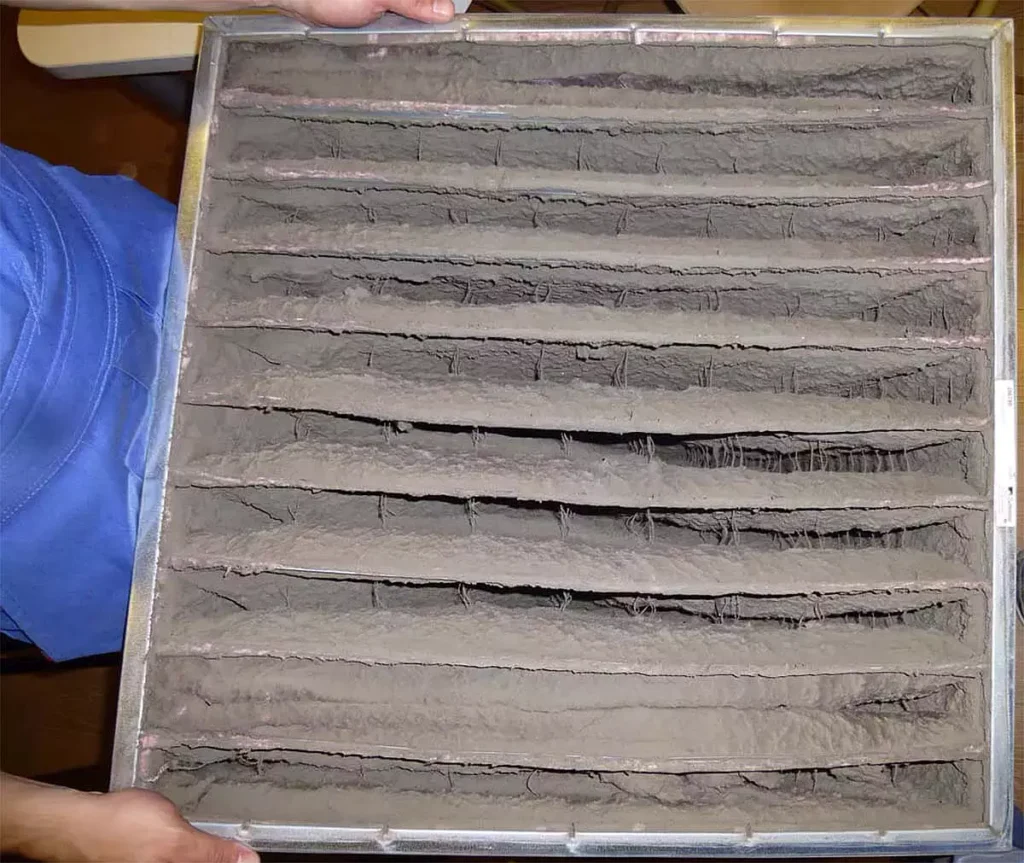
How to monitor filter efficiency
There are several ways to evaluate filter performance.
- Scheduled filter replacement is the most effective method. Recommended intervals for large cities:
- Coarse filters (panel/cassette): Monthly (summer), every 3 months (winter).
- Coarse pocket filters: Quarterly.
- Fine pocket filters: 2-3 times a year.
- Using special sensors or devices that monitor pressure fluctuations. When the pressure reaches the minimum set value, this signals the need to replace the used filter. The minimum permissible value is usually specified in the technical documentation for the product. However, it is important to keep in mind that the equipment’s capacity is not always designed to operate under conditions where the maximum permissible parameters are reached. Each type of filter has a maximum pressure in the system, depending on the degree of purification. Exceeding these values may result in filter failure and dust entering the ventilation system.
- Coarse filters - pressure 250 Pa
- Fine filters - pressure 450 Pa
Air filter maintenance
Air filter maintenance is performed simultaneously with ventilation system diagnostics. During the inspection, a list of filters in use is compiled and a schedule for their replacement and disposal of used filters is established.
Regular inspection of the ventilation system and filters helps reduce energy costs, extends the service life of equipment, and creates comfortable working conditions for personnel in the premises. Failure of air filters leads to a decrease in the purity of the supply air. The primary cause is filter element degradation; restoring the system’s functionality requires its replacement.
Particular attention should be paid to ensuring the tightness of ventilation system connections. Damaged seals allow abrasive particles (dust, dirt) to penetrate working parts, such as the fan, and other components. This can initiate a cascade of equipment failures and lead to failure of the entire ventilation unit.
Tightness diagnostics are performed using operating pressure monitoring devices and visual inspection. Factors that contribute to leaks include: improper installation, defective mechanical fasteners (locks, frames), and deterioration or absence of elastic seals. Correcting these defects requires repairs, including, if necessary, replacement of defective components.
Regeneration and restoration of filters
Filter regeneration is only permitted for coarse filters and only using the dry method. A maximum of two or three such procedures are recommended. It’s important to understand that even dry cleaning inevitably alters the filter fiber structure. This can lead to a deterioration in its filtration performance and, consequently, a reduction in its overall service life. After regeneration, the filter’s service life can be reduced by almost half.
Regenerating fine filters is strictly prohibited. This can cause irreversible damage to the filter surface, rendering the filter incapable of performing its intended function. If problems with fine filters arise, the only reliable solution is to replace them with new ones.
There are special reusable washable filters (usually pre-filters, such as G2-G4) that can be washed for a limited number of times, but if they show significant wear, they must be replaced according to the manufacturer’s recommendations.
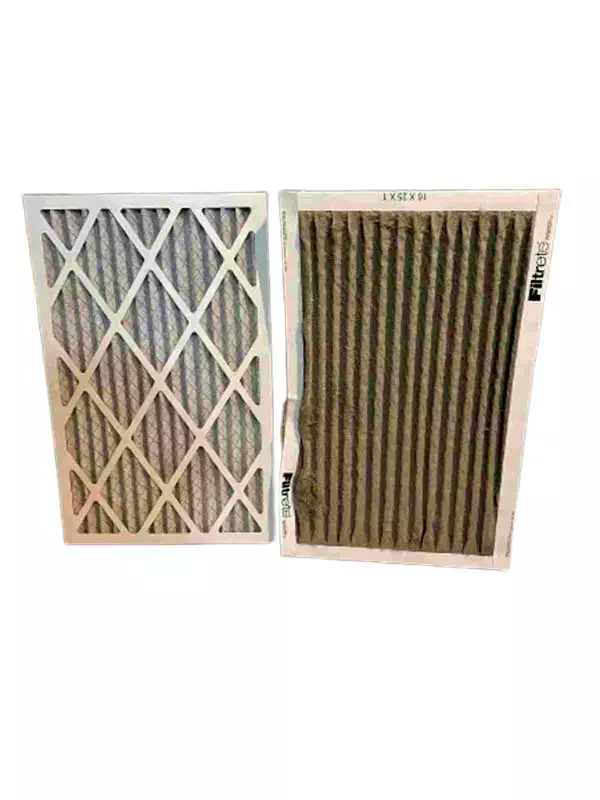
Why filters should not be washed or cleaned
The main reason is the filters’ non-reusability:
- Industrial filters of classes G4 and F7 are typically disposable and cannot be washed or cleaned. They are designed to be replaced after becoming contaminated, as attempts to clean them can damage the filter material and reduce its effectiveness.
- Filters of classes F7 and higher, made of paper or non-woven materials, are damaged when attempting to clean or rinse them, resulting in a loss of their filtering properties.
- Decreased performance: Any mechanical action during cleaning (even using a vacuum cleaner) can damage the fine fibers of the filter. This reduces its ability to capture the smallest particles and degrades the air purification quality.
- Some types of filters, such as pocket filters, can lose their original shape when attempting to clean them. This reduces their effectiveness in the ventilation system.
Ventilation filters are important
Always follow the manufacturer’s recommendations, as outlined in the instructions for your specific filter. If the filter is not washable, it should be replaced rather than attempted to be cleaned. It’s important to remember that timely filter replacement ensures the stable and efficient operation of the ventilation system. Maintaining optimal air exchange in the room is key to the health and comfort of building occupants.